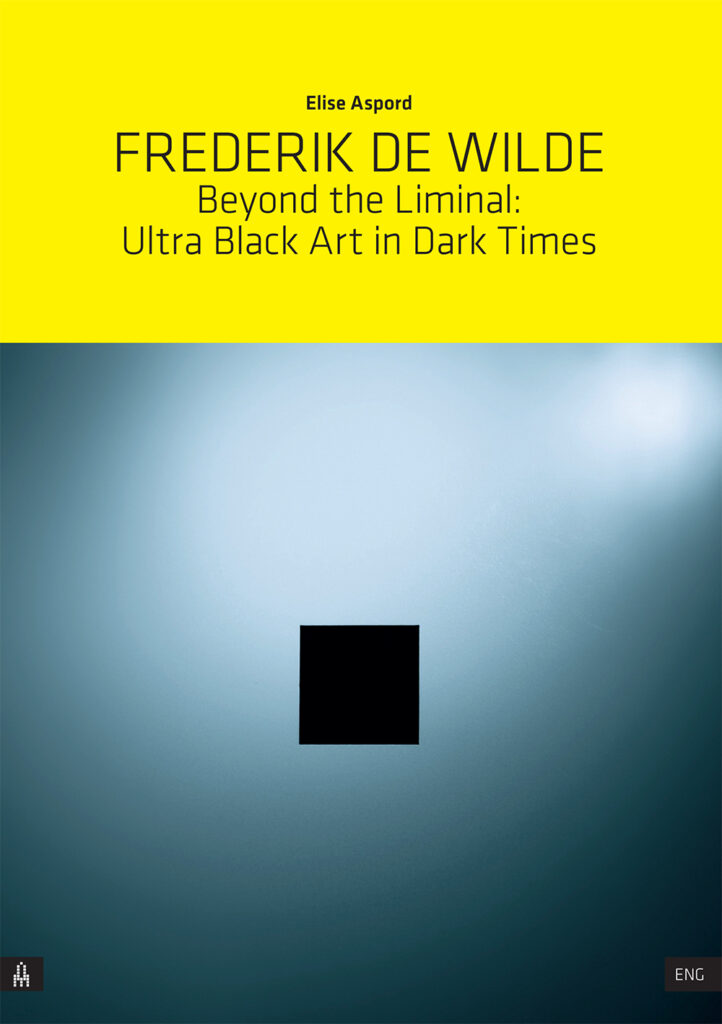
Frederik De Wilde, Beyond the Liminal: Ultra Black Art In Dark Times
<p>From the first human artistic expression in cave paintings until now, black has been constantly reinvented by art. Like other 20th-century artists (Rothko, Malevic, Klein) before him have done, Belgian Frederik De Wilde explores the nature of colors and produces monochromatic works, but focusing on black in a radical and scientific manner. In <i>Hostage</i>, as art historian Elise Aspord explains, he has created a material made up of a vertical alignment of nanotubes of carbon that can absorb almost all rays of light, thus giving a new universal reference for black. This work is the result of a close collaboration between scientists and an artist. It adheres to an aesthetic of the void and raises a paradox, making the darkness visible. Frederik De Wilde and his mysterious nanoblack invite the spectator to feel the “black shock” that is experienced when watching the unknown and the invisible.</p>
Authors: Elise Aspord
Editors: Janez Janša
Proofreading: Eric Dean Scott
Design:: Luka Umek
Layout: Sonja Grdina
Aksioma Institute for Contemporary Art
Part of: PostScriptUM