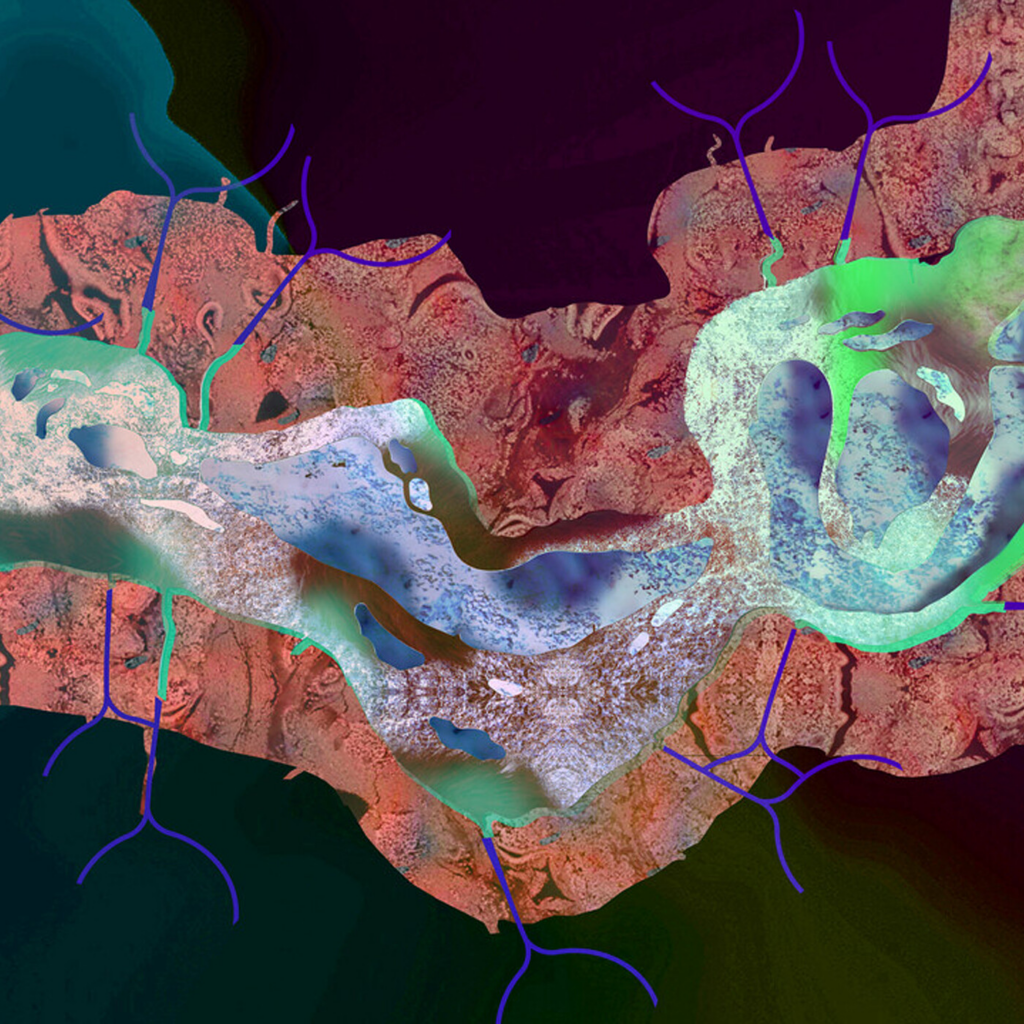
Wet-Togetherness [1]—Menstruating: Cecilia Vicuña
<p>Bodies exceed humanity. They remind us that we are part of something vaster—and smaller—more complex, more connected than our mere existence as an atomized species. Our bodies, and bodies in general, are composed out of heterogeneity and multitudes. All bodies are wet collective bodies, defined by how they link to other bodies, places, environments, technologies. Think of <strong>breathing</strong>, <strong>clogging</strong>, <strong>decomposing</strong>, <strong>discharging</strong>, <strong>flushing</strong>, <strong>lubricating</strong>, <strong>melting</strong>, <strong>menstruating</strong>, <strong>transfusing</strong>. Bodies exist as trans- and extra-territorial beings. They live in hybridity. This porous condition produces a planetary wet-togetherness, a “commoning” force that constitutes all bodies as collective hydro-subjects.</p> <p><strong>Wet-Togetherness</strong> is a collaboration between e-flux and the 13th Shanghai Biennale, <em>Bodies of Water</em>, curated by Andrés Jaque, Marina Otero Verzier, Lucia Pietroiusti, Filipa Ramos and YOU Mi, and organized and promoted by the Power Station of Art. It consists of 9 sound pieces in which 21 artists, activists and researchers enact aqueousness through sound.</p> <p><strong>Episode 1. Menstruating: Cecilia Vicuña<br /> </strong>Menstrual fluids are carriers of taboos, gender stereotypes, social behaviours, notions of life and death, purity and uncleanliness. Their symbolism connects bodies to the moon, mountains, rivers, and goddesses. Menstruating involves both synchronicity with the cosmos and forms of earthly solidarity.</p>
Editors: José Luis Espejo, Rubén Coll
Contributors: Cecilia Vicuña
Sound Designer: Tomoko Sauvage
Coordinator: Roberto González García
Voice: Yang Yang
Part of: e-flux podcast